
Read next
Huawei After Sanctions: CIDM, Kirin 9050, and Logic Folding (Pt.2)
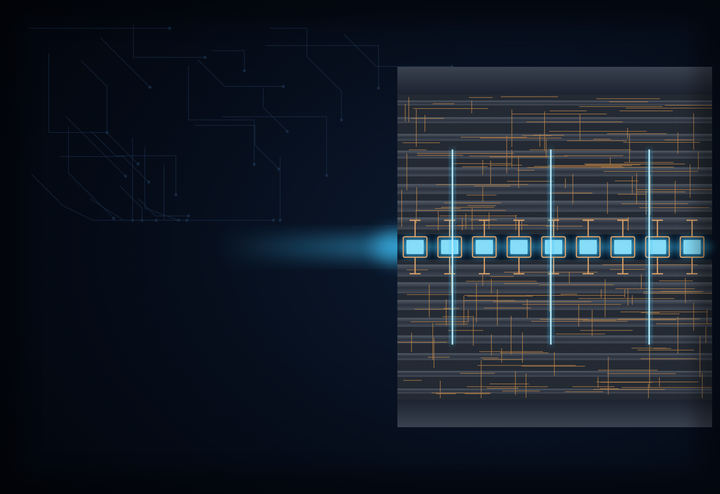
Cut off from EUV, Huawei is scaling a different way: folding two chips face to face so signals travel down rather than across. Part 2 explains why that raises clock speed without shrinking transistors, how the design repairs its own defects, and where the real wall lies.

ABBX Week 17: Oracle’s Backlog Matches a Hyperscaler. Its Balance Sheet Does Not.
ABBX Week 17 finds no broad AI bubble. Oracle is the test case: a USD 664 billion backlog, neo-cloud-like equity value, and a lease-and-capex bill that still lands before that backlog turns into cash.

Huawei After Sanctions: CIDM, Kirin 9050, and Logic Folding (Pt.1)
US sanctions bought time, not a lead. Huawei’s CIDM now ships Kirin 9050 with 1.5 µm wafer-to-wafer bonds — about 6× finer than TSMC SoIC. A coarse bond stacks two chips. A fine bond folds one circuit: two wafers, one netlist, one chip.