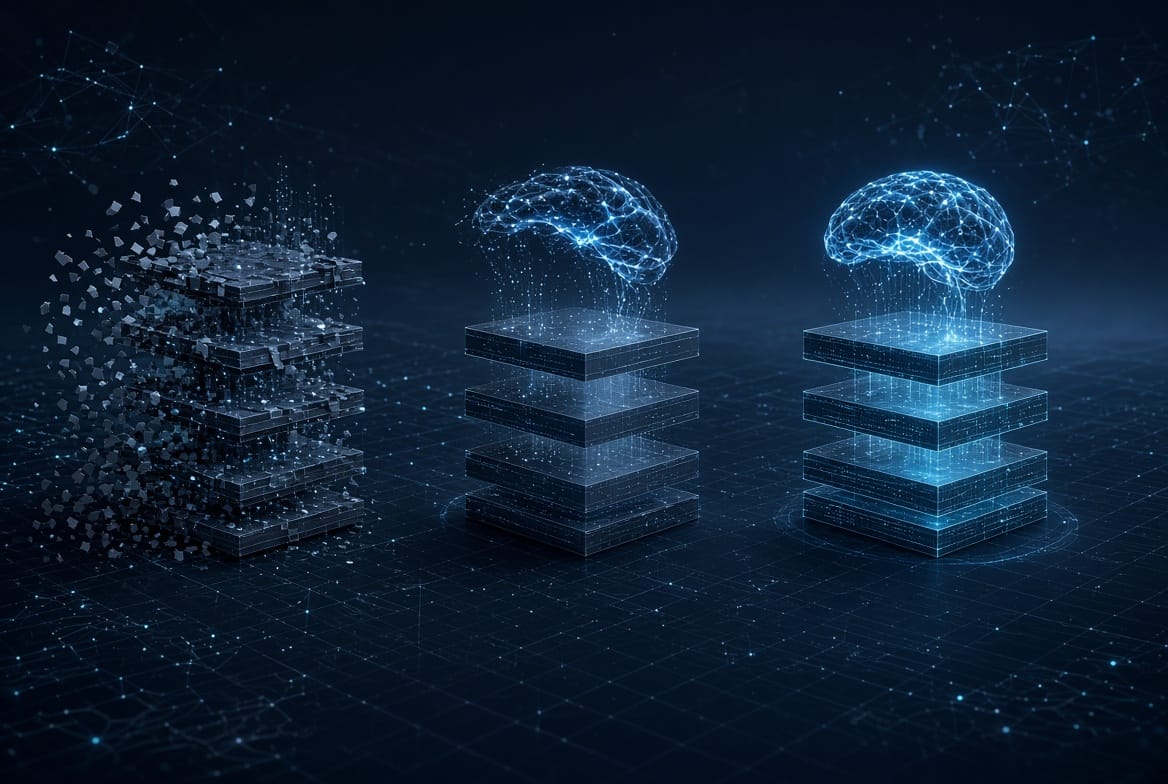
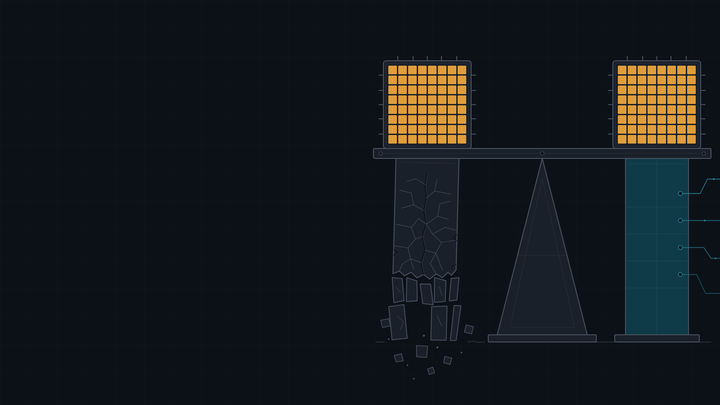
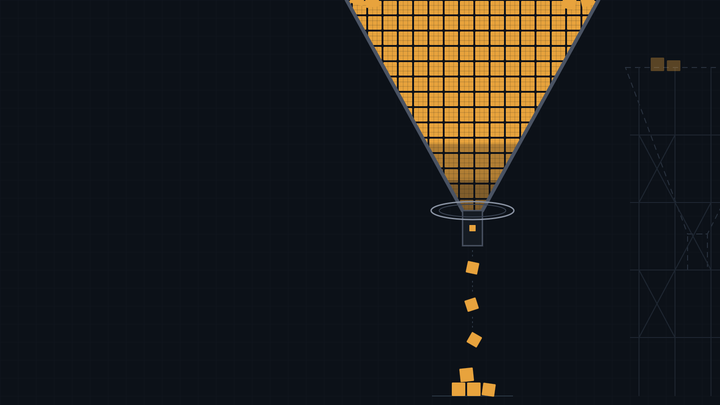
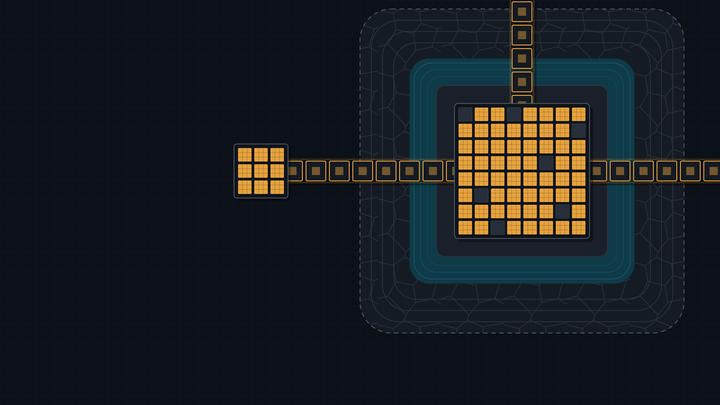
We research the AI buildout end-to-end — from nuclear fuel and grid equipment through wafers, optics, hyperscale compute, models, and agentic execution — and we translate architectural reality into unit economics, gross-margin trajectory, and long-duration valuation.
Summary * The Space DC is not a diffuse mesh of satellites spread around Earth — it is a constellation of tight orbital clusters, each functioning as a single coherent data center with nodes flying 20–160 km apart. * This tight-cluster geometry means 60–70% of all terminals by unit count are short-range, low-power, cheap EML-based links,
The AI buildout is not a single trade. It is a chain — and value migrates along it as bottlenecks shift. Click any segment to see our current view, what's tight, and the names sitting on each side of the constraint. See Coverage for the disrupted-incumbent watchlist.
Most research is finance-first — and misses the architectural moats — or tech-first, and waves away unit economics. We do both, and we translate one into the other.
"I started Convequity because I kept seeing the same disconnect — Wall Street pricing companies off trailing metrics while the real story lived in the architecture, the market dynamics, and the founder's roadmap. We go deeper into the technical stack and wider into the structural forces to understand where growth and profitability are actually heading. Then we marry that to the financials with rigor. The asymmetry between what the market sees and what the technology enables — that's our entire edge."
We dissect tech stacks layer by layer — wafer chemistry, packaging, optics, custom silicon, data planes, cloud abstractions. Architectural bets compound across capex cycles and dictate where margin actually accrues.
Architectural choices and market structure (top-down GTM vs. bottom-up adoption, seat-based vs. consumption) determine entry barriers, gross-margin trajectory, and operating leverage. We model it explicitly — full assumptions, scenarios, and sensitivities, in transparent Google Sheets clients can stress-test themselves.
Wall Street's short-termism dismisses vision as intangible, focusing instead on minor details for quarterly models. Yet, a founder's vision is fundamental—it drives the product, shapes the culture, and guides the long-term roadmap. We explicitly weight this, backing visionaries who have a proven track record of executing their ambition.
A selection of currently open long positions, mapped to the AI Value Chain. Returns are unrealized, since position open. Live portfolio verifiable on request.
As of week ending 2026.05.01 · refreshed weekly
Returns shown are unrealized P&L on selected open long positions from a 70+ name technology portfolio co-managed by Convequity, expressed as percentage gain from cost basis at position open through the most recent weekly mark. Losing positions exist alongside winners, and the full portfolio (open and closed) is available to qualified subscribers on request. Past performance is not indicative of future results. This is not investment advice or a solicitation.
No clicks, no dropdowns. The full coverage list, organized by AI Value Chain segment. The disrupted-incumbent watchlist is included as names to avoid, short-bias, or exit on rallies.
Coverage list is illustrative and updates as the chain evolves. Other tickers are actively being added to our coverage. Full report archive available to subscribers.
AI's power deficit isn't solvable with renewables alone — nuclear is the only source that delivers carbon-free gigawatts at the density hyperscalers actually need. We map the full chain from HALEU fuel bottlenecks to SMR deployment realities, separating the projects that will reach commercial operation this decade from those that won't — and identifying where investor capital compounds before consensus catches up.
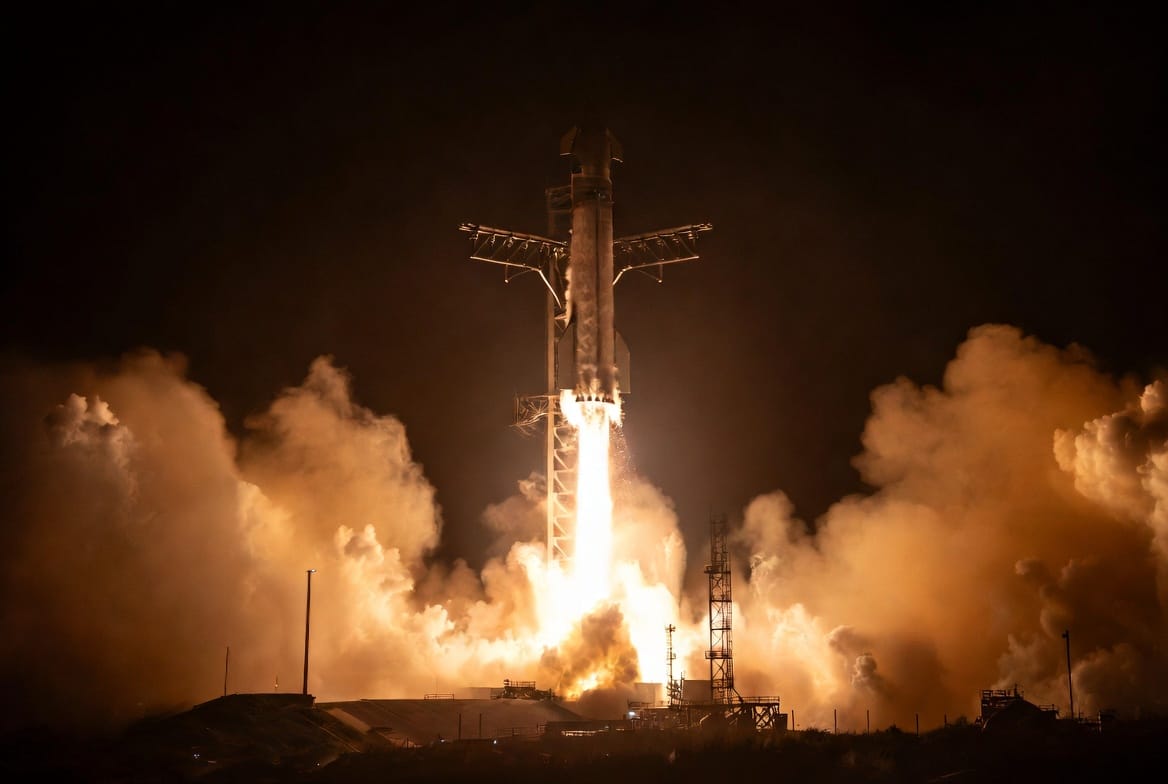
The Space Data Center isn't a thought experiment — it's an engineering program entering procurement now. We dissect the orbital architectures, photonic link hierarchies, and supply chain divergences that create entirely new component categories with no terrestrial equivalent. Most analysts are still debating feasibility; we've already mapped the winners.
Optical interconnects are no longer a component — they're the binding constraint on AI scaling. We go inside the architecture war between CPO, silicon photonics, and InP-based coherent links, mapping wafer scarcity timelines, pluggable vs. on-package economics, and the companies whose technology roadmaps lock them into hyperscaler upgrade cycles through 1.6T and beyond.
The silicon supply chain is splitting into structural winners and cyclical passengers — and the market is mispricing both. We map the multi-year capacity gaps in advanced packaging, HBM, and substrates, identify where bottleneck pricing power persists versus where relief arrives, and isolate the architectural transitions that reshape competitive positioning before earnings revisions begin.
Intelligence is leaving the data center. Autonomous vehicles, surgical robotics, and industrial automation all depend on a shared enabling stack — edge silicon, sensor fusion, and embodied reasoning — that most investors analyze in silos. We map the convergence, identify the architectural chokepoints that gate deployment timelines, and pinpoint where value concentrates as pilots become production.
AI doesn't just widen the attack surface — it creates threat categories that legacy architectures are structurally incapable of addressing. We map the emerging vulnerability stack from model poisoning to agentic exploit chains, identify where defensive spend must concentrate as regulation forces the issue, and isolate the companies building AI-native security layers with no incumbent substitute.
Single-thesis arguments, framework updates, and cross-segment observations. Published when the thinking warrants it — not on a schedule.
Request accessPalantir just posted a quarter that validates the "NVIDIA moment" thesis — 85% revenue growth, 54% FCF margins, and a Rule of 40 score most enterprise software companies never touch. But the real debate isn't the numbers; it's whether agentic AI disrupts Palantir's position or supercharges it. Our analysis unpacks why the application-layer moat is far more durable than the market fears, where the one genuine risk actually lives, and why collapsing inference costs may expand the TAM faster than competition can erode share.
Every leading silicon photonics foundry starts with the same wafer — and Soitec is the near-monopoly supplier. Our analysis maps five independent demand drivers that all converge on Soitec's Photonics-SOI platform simultaneously, explains why the pluggable-to-CPO transition intensifies rather than substitutes wafer content, and details the proprietary roadmap that keeps Soitec's moat widening as the industry scales to 1.6T and beyond. This is one of the most structurally advantaged positions in the entire AI optical supply chain, and most investors haven't mapped it yet.
POET's Optical Interposer promises to do for photonics what standardized packaging did for semiconductors — replace precision manual assembly with wafer-level integration and open the transceiver market to high-volume manufacturers previously locked out. The opportunity is real, but so is the execution cliff. Our analysis maps POET's credible path to volume through the Marvell–Celestial AI–Nvidia supply chain, explains why Broadcom's CPO stack is structurally closed to it, and confronts the valuation head-on: at 79× forward EV/Sales on minimal revenue, this is a venture-grade bet with asymmetric upside and zero margin of safety. We lay out exactly what must go right — and by when.
Two ways to engage. The research itself, or the research plus the analysts behind it.
Full access to premium content for professional investors.
Premium Research, plus the analysts behind it. Direct dialogue, custom work, and bespoke value-chain mandates scoped to your portfolio.
Subscriptions and engagements are offered to qualified institutional investors and serious allocators only. All research is independent equity research and is not personalised investment advice or a solicitation. Multi-year and custom-scope terms available on request.